Why Snowfall Calms Kids: The Science Behind Slow Visuals and Emotional Regulation
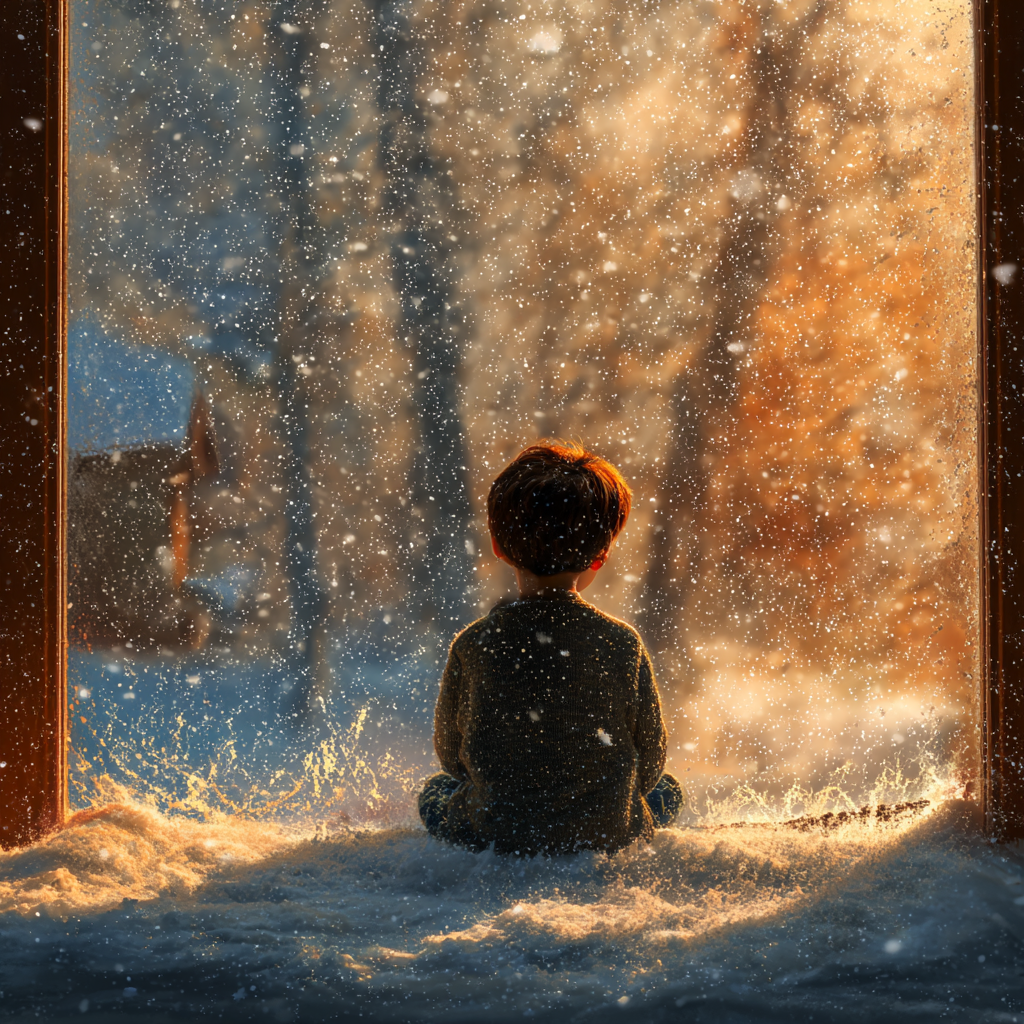
You know that moment when a kid spots the first snowfall and suddenly…everything slows down? The fidgeting stops, the breathing evens out, and they just watch. Snow has that effect—it quietly settles the whole system.
As it turns out, that calm isn’t just a feeling. It’s rooted in how the brain responds.
Today, we’re digging into the research behind why snow visuals help children regulate, and how slow-moving, low-contrast imagery—like in our Snowfall Calm video—can shift a child’s nervous system out of high alert and into a steadier, softer state.
Let’s break it all down (warm beverage optional).
❄️ 1. Slow, Predictable Visuals Lower Arousal Levels
Kids’ nervous systems are extremely sensitive to visual motion. Fast, bright, unpredictable visuals (…hello, overstimulating cartoons) tend to activate the brain’s alert systems and increase arousal.
But slow, rhythmic movement does the opposite.
Studies exploring slow visual motion have found that softer, slower movement tends to calm the nervous system.
Snowflakes mimic this beautifully: slow, soft, rhythmic, and wonderfully predictable.
This is why watching snow fall can feel like a deep exhale — it gives the nervous system something gentle to follow.
❄️ 2. Low-Contrast Imagery Reduces Sensory Overload
Unlike bright, high-saturation visuals, snowfall has:
- muted colors
- soft edges
- gradual contrast
- no intense flashes or rapid transitions
This matters — especially for kids who become overstimulated easily.
A 2022 study on controlled sensory environments found that low-arousal settings supported calmer, more regulated behavior in children with autism.
To those with neurodiverse needs, snowfall videos feel safe because the brain doesn’t have to brace for anything unexpected.
❄️ 3. Nature Imagery Supports Emotional Regulation
Even when it’s on a screen, nature has measurable calming effects.
Research shows that natural scenes reduce cognitive load and help the brain recover from overstimulation.
What we’ve learned from both child development and music therapy is this::
- Nature visuals decrease amygdala activation (the stress center)
- Children display increased calm, focus, and emotional flexibility after exposure to nature imagery
- Even virtual nature triggers parasympathetic activation (the body’s “rest and settle” mode)
Snowfall is nature’s lullaby: simple, soothing, and neurologically restorative.
❄️ 4. Rhythmic Visuals Encourage Rhythmic Breathing
Ever notice that when kids watch snow fall, their breathing slows down?
This isn’t a coincidence.
Smooth repetitive motion can help synchronize breath to a calmer tempo, making it easier for children to shift out of dysregulation.
In our Snowfall Calm video, the snow moves at a regulated speed—not too fast, not too slow—which helps little nervous systems match the pace.
It’s like visual co-regulation.
❄️ 5. Ambient, Soft Sound Enhances the Calming Effect
Pairing visuals with soft, predictable sound deepens sensory regulation.
Studies in child development and music therapy show that:
- Low-frequency, stable audio reduces emotional reactivity.
- Gentle ambient sound helps with transitions, especially for sensitive children.
- Sound + visual alignment improves body awareness and soothes the vagus nerve.
❄️ What This Means for Parents and Teachers
When a child is:
- overstimulated
- restless
- anxious
- having trouble transitioning
- “stuck” in high alert
- needing a calm-down moment
…snow visuals can help re-regulate their system.
Not because those visuals are “cute” or seasonally relevant but because it’s sensory science.
Using slow, low-contrast snowfall:
- reduces sensory load
- slows breathing
- lowers cortisol activation
- increases sustained attention
- supports emotional reset
- provides visual grounding
- creates a predictable sensory rhythm
This is why so many kids go quiet when they watch snow fall. Their nervous systems finally get a break.
❄️ Try It With Your Child: Our Snowfall Calm Video
If you want a way to bring this calming effect into your classroom or home—even on days when it’s not snowing—try our short Snowfall Calm video.
It uses:
✔ slow, predictable snow motion
✔ low-contrast winter tones
✔ soft, ambient sound
✔ gentle pacing
✔ no sudden transitions or overstimulation
Use it:
- during transitions
- before bed
- after recess
- after a meltdown
- during sensory overload
- first thing in the morning
- anytime a reset is needed
❄️ Final Thoughts: This Isn’t “Screen Time”—It’s Regulation Time
Parents often worry about screens (fair).
But calming, slow, sensory-regulation visuals are a tool, not a distraction.
When used intentionally, they help children:
- re-enter their bodies
- slow down
- breathe deeper
- focus better
- feel safer
Snowfall is nature’s way of saying:
“Slow down. You’re allowed to soften.”
And with the right visuals, you can offer that feeling anytime.